Sunrise & Scenery

VN:F [1.9.22_1171]
Rating: 3.7/5 (3 votes cast)

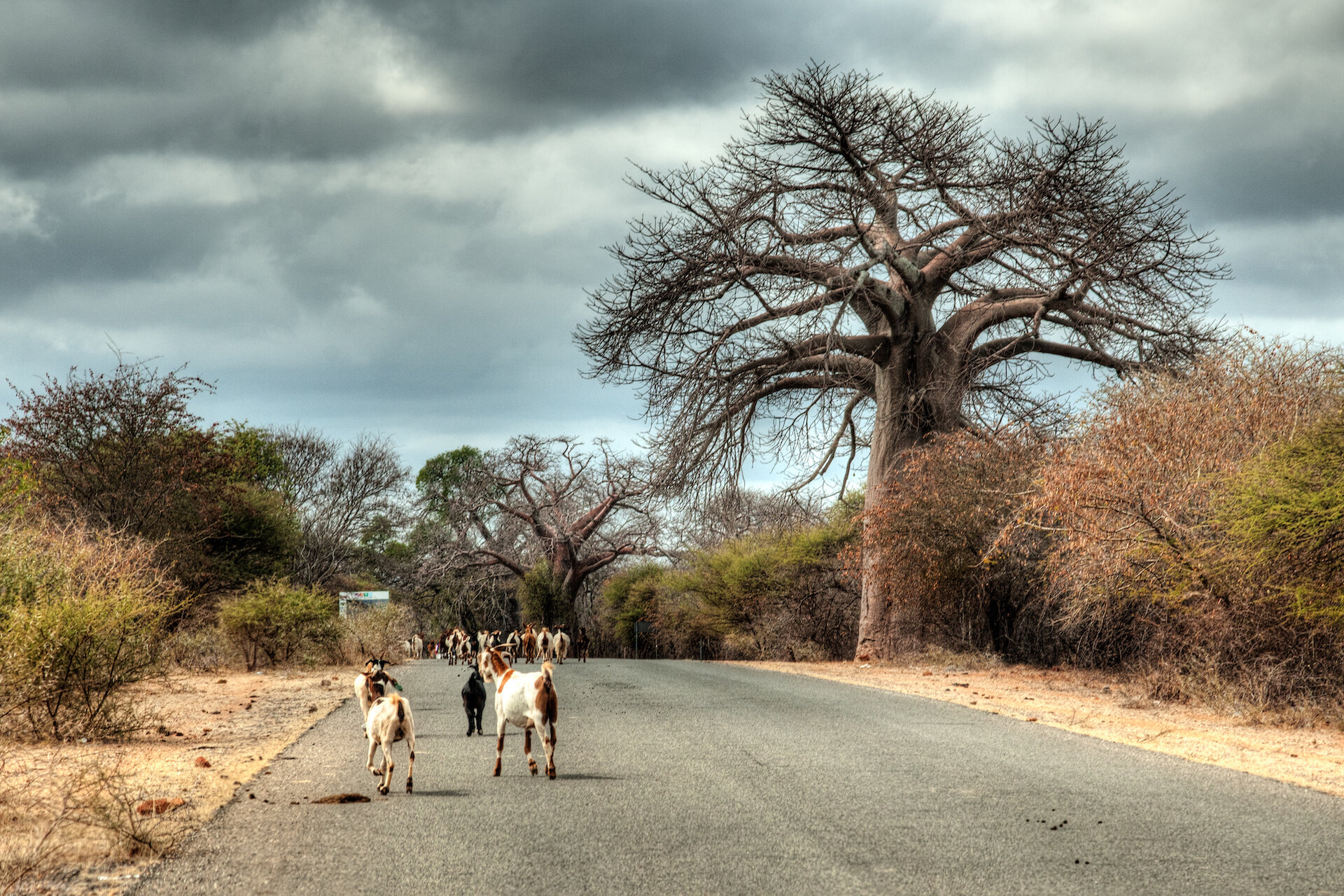
Over the past few weeks we have been asked a number of times about the scenery within Kruger. As it’s a large park, the landscape and vegetation in the north is obviously very different to that in the south. The north is typical dry lowveld with superb Baobabs intermingled with Mopani. Further south its classic Mopani which gives way to open savanna grasslands between Satara and Lower Sabi. The very south is Granite hill country almost like Matopos in Zimbabwe except without the balancing rocks and big bald Kopies.

Kruger Sunrise_1732_175

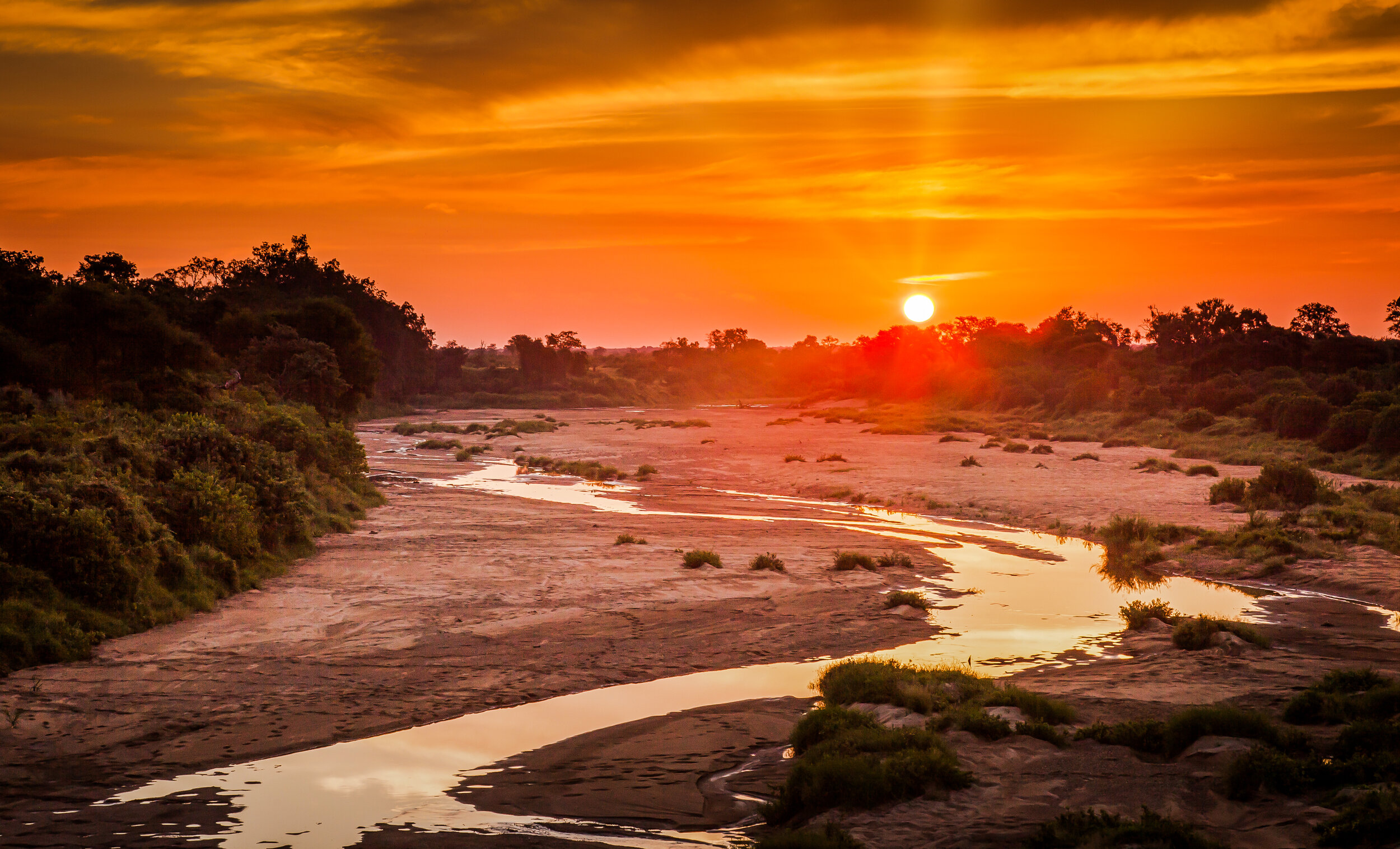
Dawn in Africa is a special time. It’s a cool and tranquil period, a transition between nightlife and day life. As the sun rises the Impala and other animals almost visibly relax and begin their daily routine of feeding, preening and heading to water for a drink before finally having to endure the tension of the night all over again.

Kruger Sunrise_1723_170

During our trip the mornings were cool. Low lying open Vleis were often shrouded in mist hanging low on the grass that diffused the light providing some striking photographic opportunities.

Frosty Kruger Sunrise_9624_180

The days were mild with the sort of bright blue cloudless skies that you only get in Africa. The contrast between the blue skyand the dry grey leafless trees and pale tan dry grass on dark brown hard trampled earth is again unique to Africa. Intermingled in all of this, huge Baobabs whose size overwhelms the surrounding bush provide a break from the dry monotony. Wonderful.

Baobab_8951_180

I have to say I love these trees more than any other. They remind me a lot of Hwange in Zimbabwe. They are quite prolific in the northern regions of Kruger but they can be found almost down to the middle of the park sometimes in unuasual locations, making for fantastic photographic opportunities wherever you are staying.

Baobab_8566_180

Most Baobabs in Africa are squat and fat. However, on the road into Kruger just after the Pafuri gate we observed an unusual tall thin one with a deep rusty red trunk that had been colonised by a cluster of Red Billed Buffalo Weaver nests.

Baobab_0264_180

These amazing birds only build on the northern side of the trees in whicht hey nest  to give the nests added protection from the effects of bad weather which invariably comes up from the south. They return to, and extend the same nests year after year into massive warrens of sticks. Clever birds!

Another interesting and colorful tree is the Fever Tree. These Acacia are tall upright trees with sparse almost feathery foliage and a sulphur-yellow bark that’s powdery to touch. They are water hungry trees so are mostly found along river banks or low lying areas with an abundance of undergroud water.  Because of their damp habitat they are associated with swarms of mosquitos which is how they got their name. Early hunters and trekkers travelling into the wilds of Africa found the groves of Fever Tree’s pleasant places to set up camp but invariably ended up catching  Malaria. Hence their name Fever Tree’s. So, if you don’t want Malaria, don’t camp under a fever tree!

Fever Tree_9173_180

Finally, to close off this piece I’m inserting a view out over the bush of southern Kruger near Malelane. I like this picture for its bands of colour, lightened by the heat haze of early afternoon the further back you go towards the horizon.

Malelane Bush_1664_181

John

VN:F [1.9.22_1171]
Rating: 3.7/5 (3 votes cast)
Sunrise & Scenery, 3.7 out of 5 based on 3 ratings

One Response to “Sunrise & Scenery”

  1. Saurooon says:

    Hi,
    Super post, Need to mark it on Digg
    Saurooon

    VA:F [1.9.22_1171]
    Rating: +3 (from 3 votes)

Leave a Reply